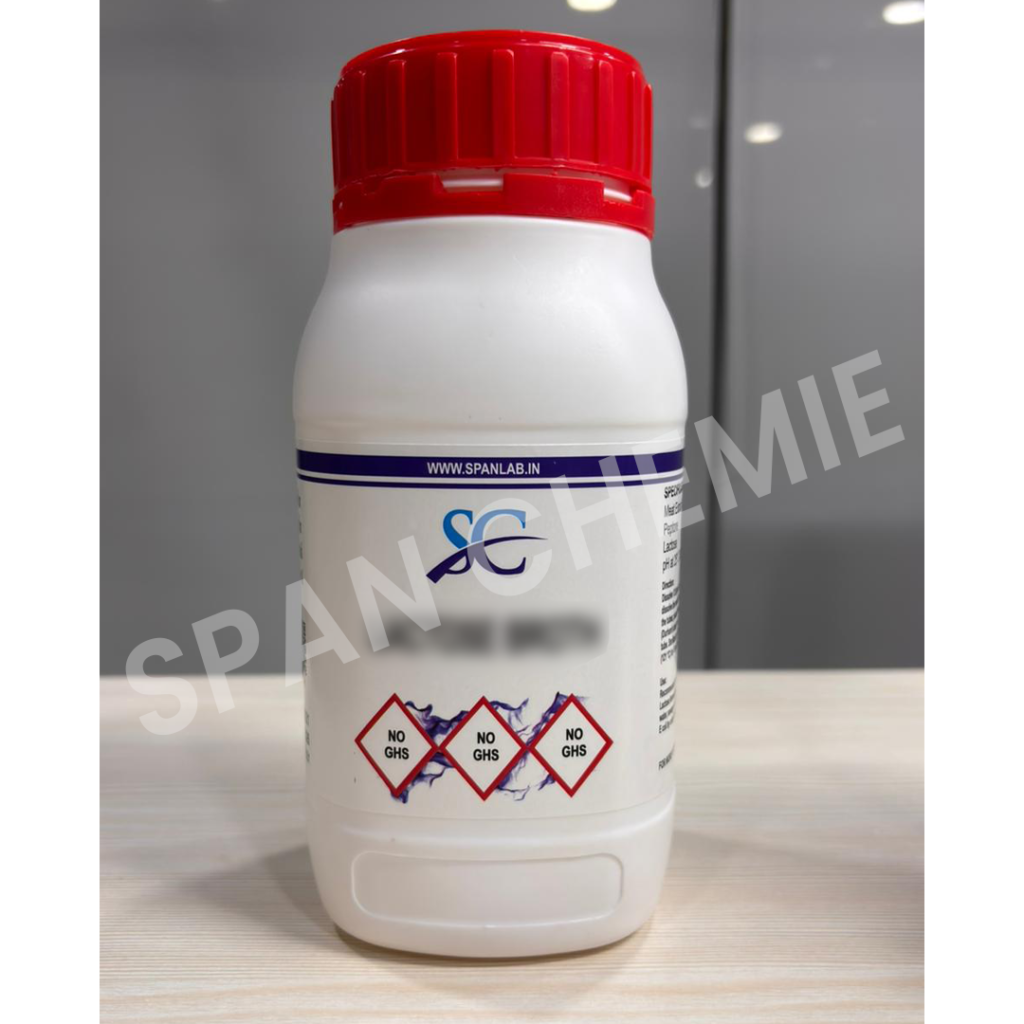
Description
The Mueller Hinton formulation was originally developed as a simple, transparent agar medium for the cultivation of pathogenic Neisseria. Development of other media led to the replacement of the use of Mueller Hinton Agar for the cultivation of pathogenic Neisseria, but it became widely used in the determination of sulfonamide resistance of gonococci and other organisms. It is now used as a test medium for antimicrobial susceptibility testing. Mueller Hinton Broth No. 2 Control Cations is used in the susceptibility testing of rapidly growing aerobic and facultatively anaerobic bacteria from clinical specimens. The medium is designed to give a low thymine and thymidine content and also the calcium and magnesium ion concentration is adjusted as recommended by CLSI. The medium is not recommended for fastidious organisms. Thymine and thymidine inhibit sulfonamide and trimethoprim activity and calcium and magnesium interferes with the activity of aminoglycoside antibiotics. In Mueller Hinton Broth No. 2 Control Cations, antimicrobial agents are prepared in serial two-fold dilutions and are inoculated with the test culture to give a final concentration of 5?105 CFU/ml. Following incubation at 35?C; the presence of turbidity indicates growth of the organism. The lowest concentration of antimicrobial agent showing no growth is the MIC of that organism for that agent. The interpretation as to whether the organism is susceptible, intermediate, or resistant in its response to the agent is made by comparing the MIC to those in the MIC interpretive standards in CLSI standard M7. Various factors have been identified as influencing broth dilution susceptibility tests. These include the medium, antimicrobial potency, inoculum concentration, pH, antimicrobial stability and mechanisms of resistance by the test organisms.